Snowy Owl Story
Kit’s Steady Lookout
Kit wants a good view of the open Arctic plain, but the first perches are far too wobbly. As Kit explores the snowy tundra, each careful step brings a new chance to test the ground.
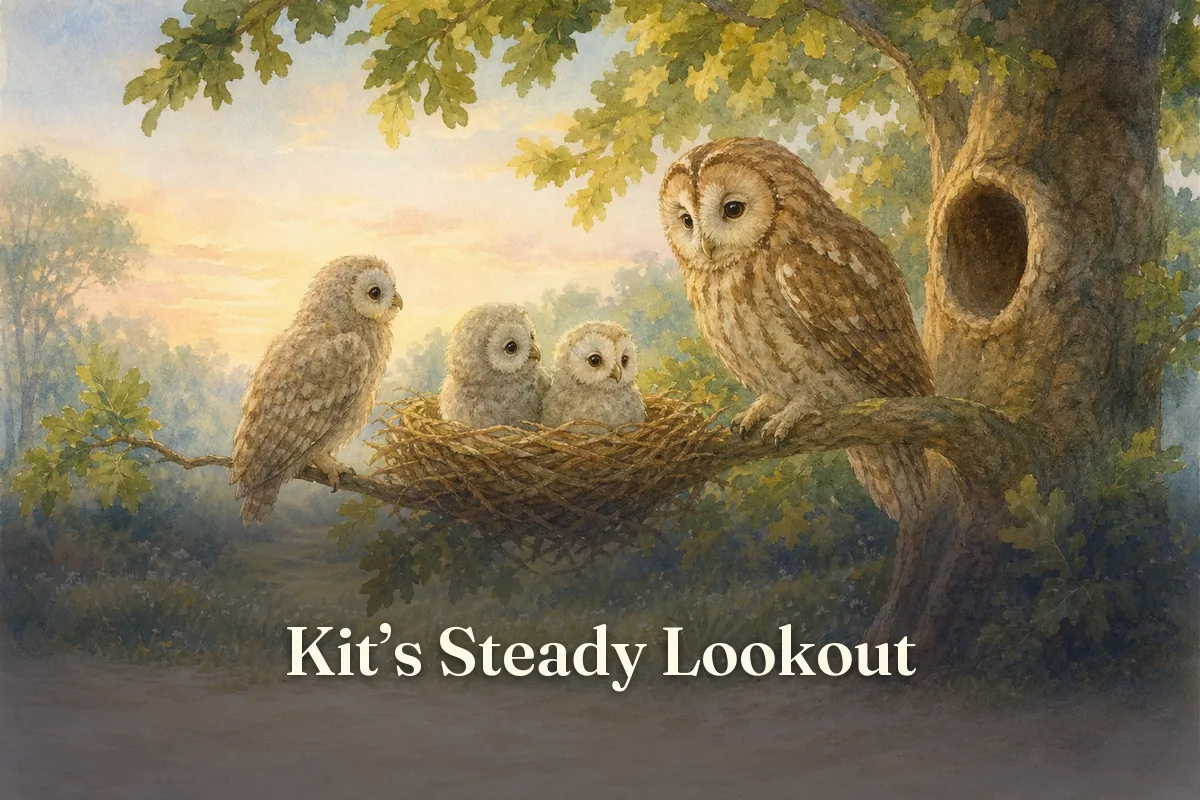
Kit landed on the first tussock. Wobble. Kit landed on the second. Wobble-wobble.
The young snowy owl spread both wings and tried to look dignified. The tussock tipped one way, then the other. Kit’s tail feathers bobbed like little white flags.
“I meant to do that,” Kit said to the empty tundra.
The open Arctic plain stretched wide in every direction. Snow covered the ground, and here and there small tussocks poked up like lumpy pillows. Kit wanted a steady perch from which to watch for small mammals moving beneath the snow. A good lookout would let Kit see a long way across the open ground.
Kit hopped to a third tussock. It looked broad and sturdy. Kit placed one foot on it. Then the other.
Wibble.
Kit froze. The tussock settled. Kit lifted one foot to test it again.
Wobble!
Kit flapped hard and stayed upright, though one wing brushed the snow. A puff of powder landed on Kit’s head.
“Very funny,” Kit told the tussock.
The tussock did not answer. It only leaned a little farther.
Kit stepped off and shook the snow from those head feathers. Perhaps the next one would be better. Kit chose a low mound and landed softly, as softly as an owl could.
The mound gave a slow, sneaky tilt. Kit leaned left. The mound leaned right. Kit leaned right. The mound leaned left.
For a moment, they seemed to be dancing together. Kit did not enjoy the dance.
At last, Kit hopped down onto the flat snow. The feet felt much steadier there, but the view was low. A tiny ridge of snow hid part of the plain.
Kit looked over the tussocks. Beyond them, a broad rise curved gently above the open ground. It looked different from the lumpy little mounds. But looks could be tricky. Kit had learned that much.
“First,” Kit said, “I’ll find out what it does when I step on it.”
Then Kit walked toward the rise, placing each foot carefully in the snow.
The broad rise sat quietly in the middle of the plain. It was not tall, but its top looked wide enough for two Kits, if two Kits could agree where to sit.
Kit stopped at the bottom and pressed one foot into the snow. The surface felt packed and firm. Kit pressed the other foot beside it. Nothing shifted.
“Good start,” Kit whispered.
Kit stepped up with both feet. The rise stayed still. Kit leaned left, then right, remembering the tussock dance. The ground did not lean back.
Next Kit lifted one foot and set it down again. Still steady. Kit gave a small hop.
The rise held.
Kit gave a slightly bigger hop. The rise held that, too. Kit’s feathers bounced, but the ground stayed put.
“Excellent manners,” Kit said.
Now Kit settled onto the broad top and looked out. From here, the little tussocks seemed even lumpier. Kit could see across the snowy plain, past a shallow dip and around a low sweep of wind-packed snow. Nothing blocked the view.
Kit turned slowly, watching the ground. Snowy owls lived in open Arctic places like this, where they could scan far and spot small mammals. Kit searched for a twitch, a track, or any tiny sign of movement.
At first there was only snow. Then, near the shallow dip, a little patch of snow trembled.
Kit went still.
A small lemming poked its nose out, sniffed the air, and hurried across the open patch. Kit followed it with sharp eyes. The lemming ducked behind a low ridge and disappeared.
Kit’s wings opened a little. The lookout was high enough to see the lemming’s path, and the broad rise stayed steady beneath Kit’s feet. Kit could have swooped after it, but the little animal was already tucked away beneath the snow. There was no need to rush after a vanished nose.
Instead, Kit watched the place where it had gone. The snow remained quiet. The rise remained firm.
Kit made one last test, shifting weight from one foot to the other. Not a wobble. Not even a wiggle.
At last, Kit had found a lookout that did not try to dance.
Kit stayed on the rise and kept watch. The broad top was a fine place to stand, and an even finer place to sit. Kit folded both feet beneath the feathers and let the eyes travel over the plain.
A faint line of tracks crossed the snow near the dip. Kit studied them from the steady perch. They curved behind a ridge, then vanished where the wind had brushed the surface smooth. Kit did not need to follow them. The whole open plain was spread out below, wide and quiet.
The breeze skimmed over the snow and ruffled Kit’s cheek feathers. Kit blinked once. Then again. The rise did not tip, even when Kit leaned forward to see farther.
“That’s how a lookout should behave,” Kit murmured.
The tussocks sat below, rounded under their blankets of snow. From up here they looked less like useful perches and more like a row of lumpy hats. Kit imagined each one wearing a little feather on top. The picture made Kit give a small, breathy hoot.
A few snowflakes moved across the plain. They settled on Kit’s back and melted into the thick feathers. The light grew quieter, and the far edge of the tundra softened from clear white to a hazy gray. Kit watched until there was no more movement to notice and no reason to keep searching.
The rise stayed firm beneath Kit. The open ground stayed still. Kit tucked the beak into the warm feathers along one shoulder, then tucked the other wing close.
For a little while, Kit kept one eye open, just in case the lemming came out again. The eye closed. Kit opened it once more to make sure the rise was still steady.
It was.
Kit settled down, snug on the broad, firm perch, while the quiet Arctic evening gathered around the snowy plain.
Reading aloud
Let Kit’s playful comments sound gently amused, then slow your pace as the Arctic evening grows quiet.
Good to know
- Snowy owls live in open Arctic places where they can scan the ground for small mammals.
- Lemmings may move beneath the snow and emerge onto the surface.