Snap Pea Story
Ruby and the Rain-Washed Rows
Ruby is eager to bring the first snap peas of spring to her neighborhood potluck, but rain has blurred the labels on two garden rows. As she searches for a way to tell the young plants apart, she learns to notice the small details growing around her.
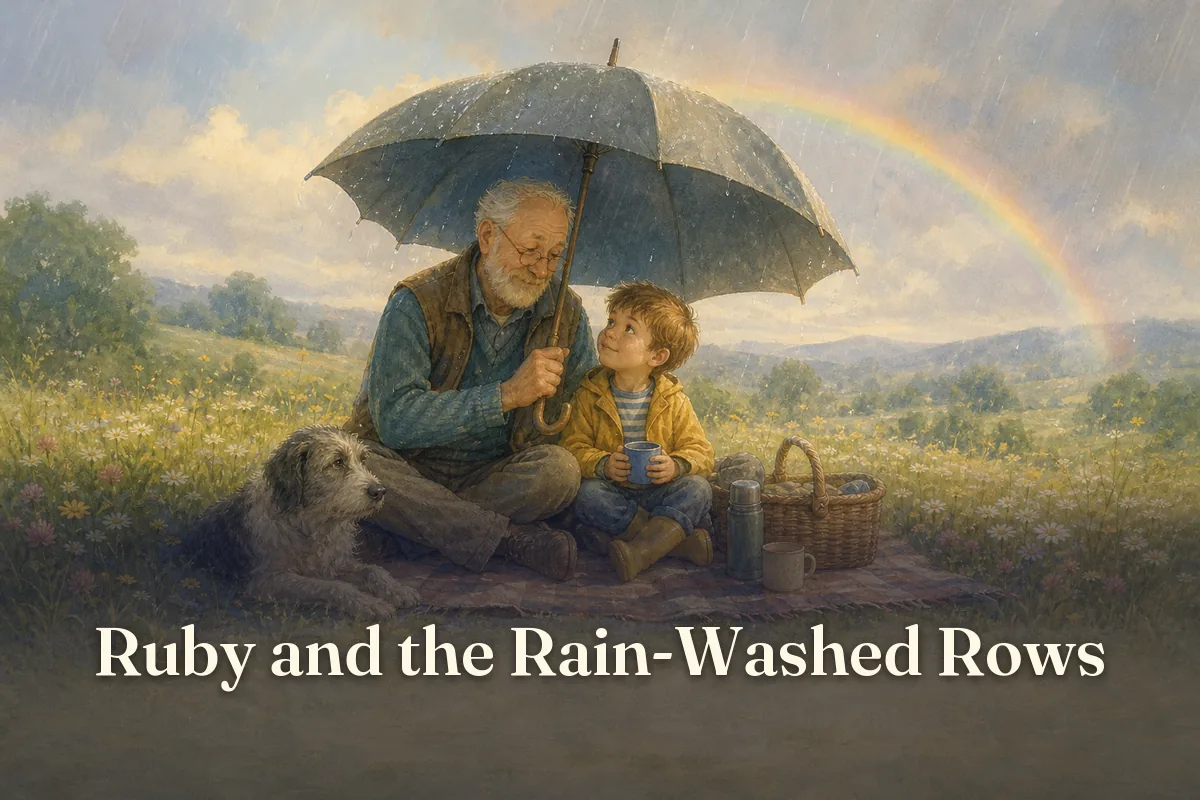
Ruby hurried into the garden after the rain. “The peas should be ready soon—but which row is ours?”
The little community garden smelled like wet earth and fresh leaves. Raindrops clung to the fence. A puddle filled the path, and Ruby stepped around it in her yellow boots. She had come to check the two rows beside the wooden trellis. One held the first snap peas of spring. The other held something else. Ruby couldn’t remember which was which.
At the neighborhood potluck, everyone hoped to taste the first peas. Ruby had promised to bring them in a bowl. She pictured the crisp green pods on the table, ready for sharing. But now the paper labels at the ends of the rows drooped like soggy little flags. Their words had run into pale blue smudges.
“Oh, rain,” Ruby said, peering at one label. “You washed away our clues.”
Her neighbor Mr. Bell arrived with a small garden trowel. His hat had a raindrop on its brim. “Can you solve the row mystery, Ruby?” he asked.
“I’m going to try,” she said. “The peas are counting on me.”
Mr. Bell smiled. “Then look carefully. The garden has a way of telling you things.”
Ruby studied the rows. Both had dark, damp soil. Both held small green plants, each with a pair of leaves reaching toward the morning. At first, they looked just alike. She crouched beside the first row, then the second. She spotted a tiny stone shaped like a heart, a bent twig, and one striped beetle crossing a leaf. None of those clues told her where the peas were.
She checked the trellis. Thin strings stretched between its posts, still wet from the storm. Ruby remembered helping to tie them up weeks ago. She remembered planting seeds, too—but the rows had seemed much longer then, and Mr. Bell had been humming while she worked.
Ruby brushed a damp curl from her forehead. “There must be something different,” she murmured.
A breeze nudged the leaves. One small green curl peeked from beneath them, then tucked out of sight. Ruby leaned closer. Was that a clue? She followed the row with her eyes, searching for another.
Ruby moved slowly along the first row. She looked at each plant without touching it. Near the trellis, a thin green thread curled around a string. A few inches farther on, another plant held tight to a wooden support with a little loop of its own.
Ruby smiled. “Tendrils!” she whispered. Pea plants grew tendrils that curled around supports, just like the curling green thread she had spotted. She remembered seeing them on the pea row before the rain. Now she checked the other row. Its young leaves stood upright, but none of its plants had tendrils wrapped around the strings.
“Could it really be that simple?” Ruby asked.
Mr. Bell came to look. “What do you notice?”
“Only this row has the curly tendrils holding on,” Ruby said. “So this must be the peas!”
She walked the whole length of the row, checking one plant after another. Near the end, she found another tendril coiled around a support. The clue was there all along, hiding in plain sight beneath the wet leaves.
Ruby wanted to be sure the rows wouldn’t get mixed up again. She took a bright red ribbon from her jacket pocket. It was left over from tying up a bundle of garden twine. She looped it around the first trellis post and made a neat bow.
“There,” she said. “Now everyone will know where the peas are.”
Mr. Bell nodded. “A fine mark—and you figured it out yourself.”
Ruby looked at the ribbon as it lifted and settled in the breeze. She felt proud, but she didn’t pick any pods yet. They were still small and flat, and she knew they needed more time. So she tucked the loose end of the ribbon around the post and left the plants to grow.
Each visit brought a new change. The tendrils climbed higher. White blossoms appeared, then gave way to slim green pods. Ruby checked them gently with her eyes. At last, one morning, the pods looked plump and ready.
“Today’s the day,” she told Mr. Bell. She reached for the first pea pod, then paused to admire the red bow. The garden’s little mystery had become a harvest, and Ruby was ready to share it.
Ruby picked only the plump pods, one by one, and placed them in a small basket. The peas felt cool against her fingers. She left the smaller pods on the vines to grow a little longer.
Mr. Bell held the basket while Ruby checked along the row. “Any more ready?” he asked.
Ruby spotted one tucked behind a leaf. “There’s another!” She snipped it carefully and added it to the pile. Soon the basket held enough snap peas for the neighborhood potluck.
Ruby carried it home with both hands. She washed the pods in a bowl of cool water, then dried them on a clean towel. Their green skins looked fresh and smooth. She arranged them in a serving bowl, saving a few to show Mr. Bell before the potluck began.
At the garden table, neighbors brought warm bread, little pies, and bowls of salad. Ruby set down her peas. Everyone leaned closer.
“The first snap peas of spring!” she announced.
A little boy named Otis picked one. He snapped it in half, and the pod made a small, crisp sound. “It’s sweet!” he said.
Soon the bowl passed from hand to hand. Ruby watched the neighbors share the peas, and she was glad she had kept looking when the labels were ruined. Mr. Bell lifted one pod in a cheerful toast.
“To Ruby, who followed the tendrils!”
Ruby laughed. “The garden gave me the clue.”
After the potluck, she walked back to the garden with Mr. Bell. The paths were quiet now, and the damp soil held the day’s coolness. The red ribbon was still tied to the pea row, its bow resting against the post. Ruby smoothed it gently so it would be easy to see the next morning.
The peas climbed their strings, and a few leaves stirred as the evening breeze passed through. Ruby said good night to the garden, to the trellis, and to the little rows waiting for another day of growing.
At home, she set her muddy boots by the door. She thought of the neighbors passing the bowl and of the tiny green tendrils curling around their supports. Then she climbed into bed, feeling pleased that a careful look had helped the whole neighborhood taste spring.
Outside, the ribbon stayed beside the peas, while Ruby settled into the quiet of the night.
Good to know
- Pea plants grow tendrils that curl around supports.
- Pea pods grow from blossoms, and smaller pods need more time to mature.