Whale Story
Lark and the Rain-Wrapped Point
A sudden rain shower makes a familiar rocky point disappear from Lark’s view as he swims through the bay with Casey. Unsure which way to go, Lark has to decide whether to press on or pause and look again.
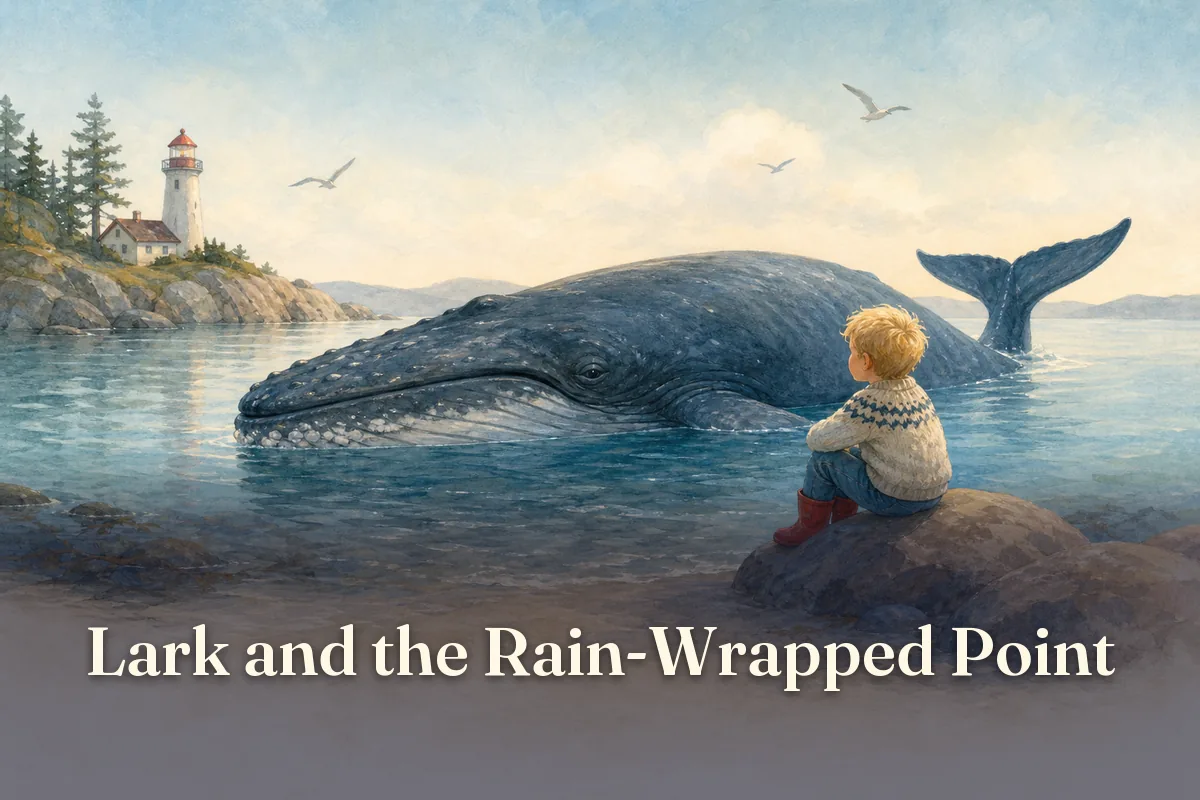
The rocky point was there—and then the rain folded it out of sight.
A moment before, Lark could see its dark, rounded shoulder at the edge of the bay. Now a gray curtain swept across the water, and the point disappeared. Lark blinked as a chilly bead of rain brushed his muzzle.
“Where did it go?” he asked.
“Still in the same place,” said Casey, swimming beside him. Casey was a little older, with a pale mark near one fin. “The rain is making it hard to see.”
Lark knew the point well. Its low rocks made a familiar shape against the shore, like a sleeping sea lion. He and Casey had passed it many times. Once they reached it, they would be at the quiet edge of the bay, where the water curved around toward home.
“I wanted to get there before the next wave,” Lark said. He gave a small flick of his tail, then stopped. Without the point to guide him, the broad bay looked different in every direction.
Casey lifted her back through the surface. A little puff of air rose from the breathing hole on top of her head. Lark followed, coming up for his own breath. The rain tapped the water all around them.
“Let’s keep close,” Casey said. “We can look again in a moment.”
Lark stayed alongside her. He could see the silver curve of Casey’s side, but the shoreline was only a smudge. He listened. Rain pattered on the bay. Somewhere farther off, a gull called once, then went quiet.
Lark wanted to swim on. His tail was ready to push them toward the bay’s edge. But he remembered how the point always appeared after they rounded the wide middle of the bay. It had not moved. The rain had only hidden it.
“Maybe we don’t have to guess,” he said. “Maybe we can wait until we can see it again.”
Casey nodded. “Let’s stay here together until the point comes back into view.”
They floated near the surface, close enough to keep each other in view, while the rain traveled over the bay.
Rain continued to patter across the bay. It softened the far shore until the trees and rocks blended into one long gray line. Lark tried to pick out the point, but each patch of water seemed to lead somewhere else.
He felt a small urge to choose a direction and hurry. Then he remembered his own idea: wait, and look again. He stayed near Casey instead. They rose for air, one after the other, then let the water carry them gently in place.
“Can you hear the gull?” Lark asked.
“I can,” Casey said. “But a sound can come from farther away than it seems.”
Lark listened again. The gull called from somewhere along the shore, but the rain scattered the sound. He did not use it to steer. He watched the water, watched Casey, and waited.
A brighter patch opened above them. The rain thinned from a steady patter to a few quick taps. Beyond Casey’s shoulder, a dark shape began to form. First it was only a blur. Then one sloping side appeared, followed by the rounded top.
“The point!” Lark called.
He started to turn toward it, then paused. “Is that our familiar one?”
Casey looked carefully. “See the little notch on the left? That’s the one.”
Lark looked again. The notch made the rocky shoulder easy to recognize. He had seen that small dip on many swims with Casey. The landmark had been there all along, waiting behind the rain.
“I found it by waiting,” Lark said.
“You made a good choice,” Casey replied. “Now we know where to go.”
Lark turned his body toward the point. Casey came alongside him, and together they began to swim. They kept an easy pace, surfacing now and then to breathe. With each stretch of water between them and the shore, the point grew clearer.
The rain still dotted the bay, but it no longer hid the way. Lark watched the notch as they swam, and Casey stayed beside him. Their path was familiar again, and they moved toward it together.
The bay grew brighter as the last thick rain clouds passed over the shore. A few drops still tapped the water, making little rings that opened and vanished around Lark and Casey.
The rocky point stood plainly ahead. Its rounded top and small notch matched the shape Lark remembered. He could see where the rocks met the water, and beyond them the familiar curve of the bay’s edge.
“There it is,” Lark said, though now he did not need to ask if it was the right one.
Casey swam beside him. “You recognized it.”
“I recognized the notch,” Lark said. “And I recognized that waiting can help.”
They passed a patch of floating seaweed, its long leaves waving beneath the surface. Lark watched it trail behind them, then turned his eyes back to the shore. The point did not vanish this time. The rain had faded to a few soft drops, and the far rocks stood clear against the water.
At the familiar edge of the bay, Lark and Casey slowed. The water moved quietly around the rocks. A gull perched on a ledge and drew its bill into the feathers along its chest. Lark rose to breathe, and Casey surfaced beside him. Their breaths made two brief, airy sounds above the water.
“Homeward from here?” Lark asked.
“Together,” Casey said.
They turned along the bay’s familiar curve. Lark felt pleased—not because he had hurried, but because he had noticed what the rain was doing and chosen to wait. Casey’s pale fin mark stayed close by, steady as they swam through the clear water.
The shower passed. A last drop slid from Lark’s back and fell into the bay. He and Casey continued at an easy pace, while the point rested behind them at the edge of the shore. Soon the water would be quiet for the night, and Lark would have a safe place to rest beside his friend.
Good to know
- Whales surface to breathe through a breathing hole on top of the head.
- Rain and poor visibility can make it harder to recognize landmarks.